Guest Post: Your Feed Is Being Gerrymandered
How invisible algorithms redraw our reality and weaken our democracy
For years, we’ve talked about gerrymandering as a political tactic that redraws physical lines on a map. But what too few Americans realize is that the same strategy now takes place on our devices. And unlike the maps we can see, these digital borders are invisible, covertly impacting our beliefs. When an algorithm decides which voices you hear and which ones disappear, we lose the shared reality a democracy requires to function.
In today’s newsletter, I partner with Feel Good Action – an incredible nonprofit using the power of social networks and digital media to motivate individual and collective action. That said, it’s important that we hear directly from them about the hidden threats of digital gerrymandering. Be sure to subscribe to Feel Good Action after reading more in order to support their mission to advance resilient communities and more just societies. Let’s Address This.
Let's Address This with Qasim Rashid is a reader-supported publication. To receive new posts and support my work, consider becoming a free or paid subscriber.
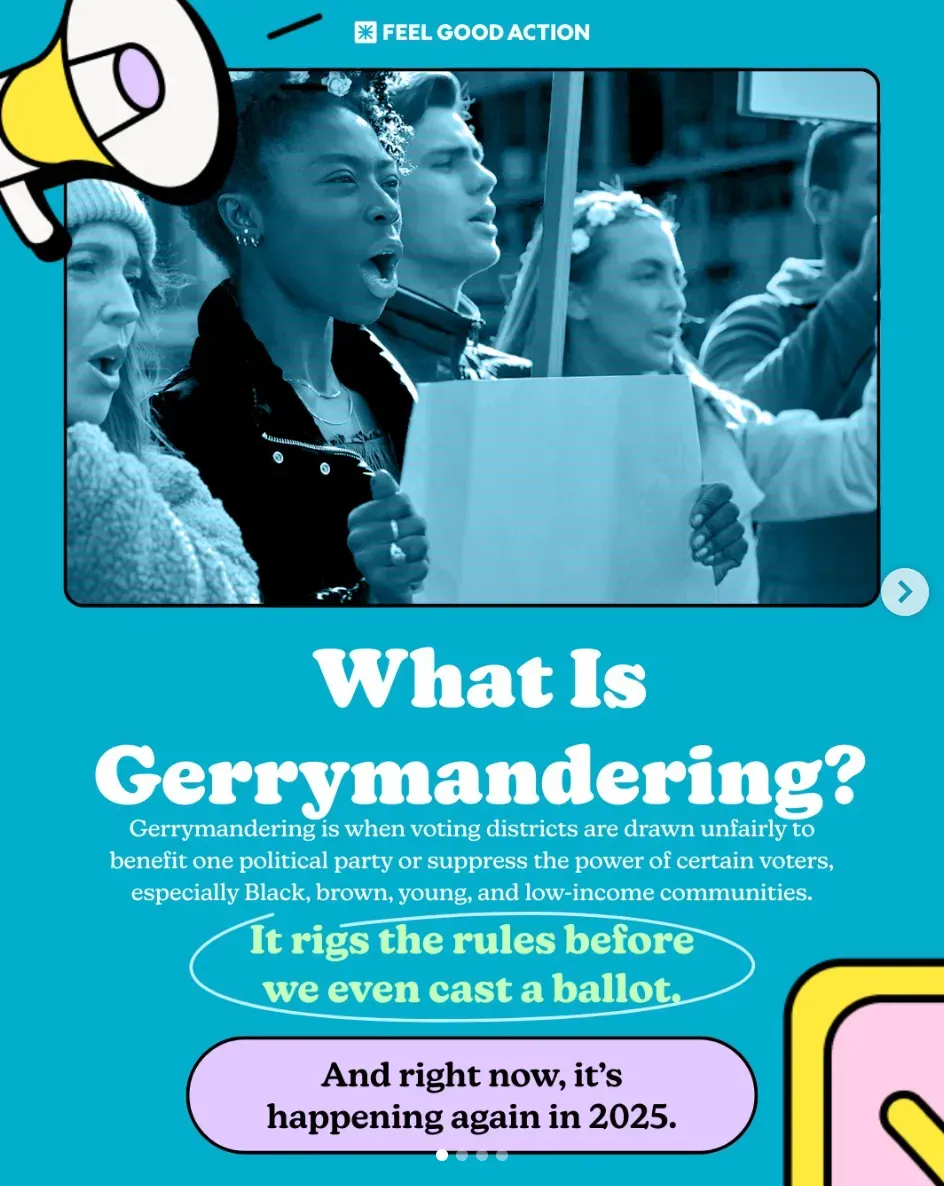
Your Feed Is Being Gerrymandered
By: Feel Good Action
Gerrymandering has been in the news across the country in recent months. In case you’ve gotten lost in all the back and forth, here’s a recap:
Over the summer, Texas Republicans passed a measure to redraw their congressional districts. The new map created five additional congressional seats to favor their party.
Usually, redistricting happens every 10 years. After the U.S. Census, congressional districts are redrawn to reflect population changes. This was last done in 2020, and congressional maps around the nation were updated accordingly. In a highly unusual request, President Trump asked Texas Republicans to redistrict its Congressional maps mid-decade in order to alter five districts that tend to vote Democratic and create districts that lean heavily Republican.
California quickly responded, asking voters to pass Prop 50, a ballot measure allowing the state to temporarily redistrict its own maps should Texas follow through. Voters approved the measure on November 4, 2025. Now, California will move forward with maps counterbalancing the Republican gains in Texas for the Democrats.
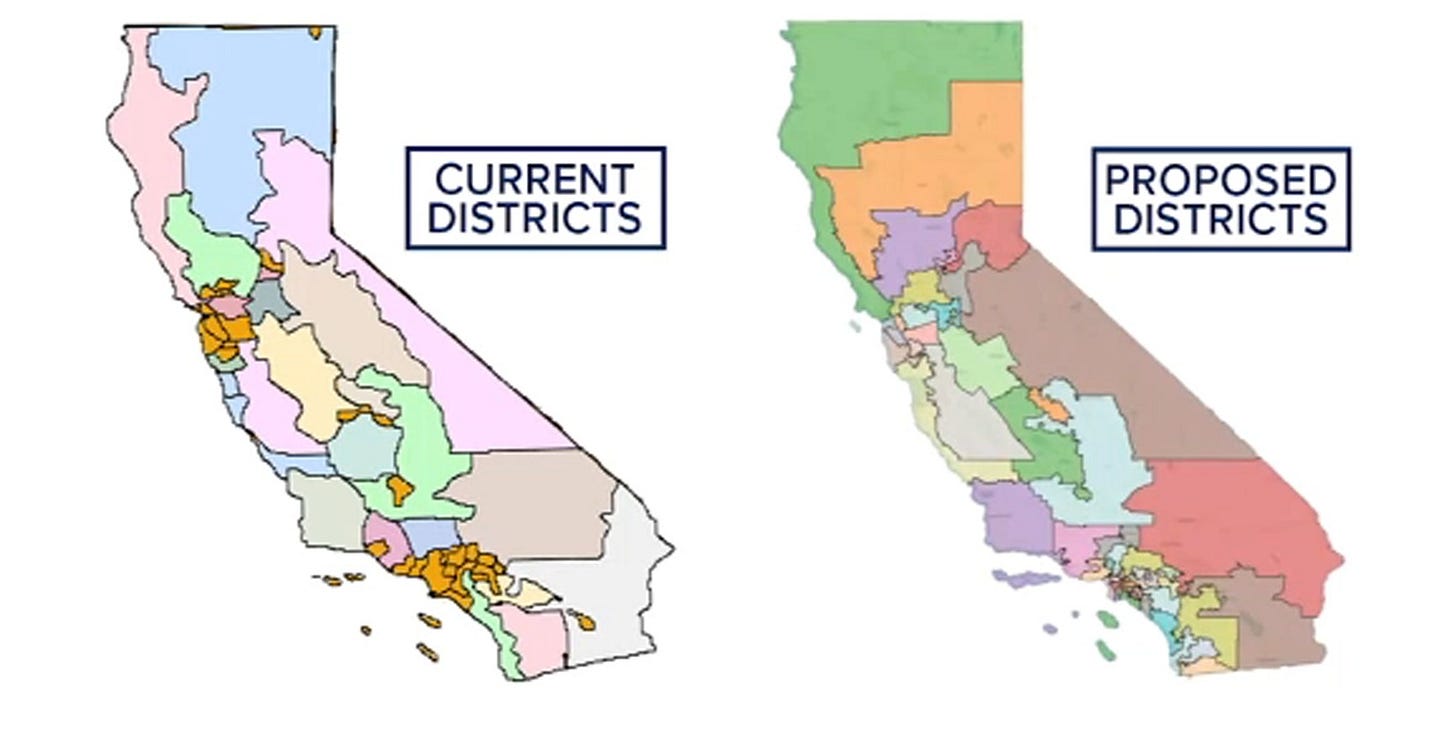
But things haven’t stopped there. As of this article, lawmakers in Missouri, Indiana, Ohio and North Carolina are now also attempting to redraw maps in order to secure congressional seats, along with control of the House, in the midterms. Other states, like Maryland, are also considering redistricting.
But gerrymandering goes beyond map drawing.
Let's Address This with Qasim Rashid is a reader-supported publication. To receive new posts and support my work, consider becoming a free or paid subscriber.
What Is Digital Gerrymandering
1 in 5 Americans now get their news from social media. This can be positive, allowing stories that traditional journalists would not usually cover to gain virality. It can also be dangerous, fueling the spread of misinformation and “fake news.” We’ve seen this happen on X, when Elon Musk rolled back fact checking in favor of “community notes,” where users contribute feedback to add context to misleading posts rather than professional, independent fact checkers. More recently, Mark Zuckerberg announced Meta platforms would follow suit, dropping fact checking despite a growing amount of online misinformation.
More alarmingly, most Americans don’t think about the ways the apps they use are digitally gerrymandered. Even if you are one of the internet all-stars who diligently fact checks news for yourself, you can’t escape the algorithm. The more you like, comment, and share one side’s political content, the more you’ll see on your feed. The process is slow: maybe you like one video talking about voting rights, then the next week you see two. Over time, this creates an echo chamber, with social media platforms only showing you news that you already agree with and suppressing other perspectives.
When outside perspectives are censored from our feeds, we grow skeptical when we do see them. We’re more likely to question the other side before doing any independent fact checking. As time goes on, we become more polarized in our beliefs – and even more radical. Politicians are noting this – pouring money into influencer campaigns where they can promote policies and candidates, knowing that their messaging will be pushed out by algorithms designed to show users what they want to see.
So should you delete Instagram and stop opening TikTok links in the group chat? Of course not. While social media platforms aren’t making efforts to change their algorithms, users are becoming more aware of how they operate. When we know we’re only seeing one side of a story, we think about the content we’re consuming more critically. A good rule of thumb? If a story sounds outrageous, go check a couple other sources. We may not be able to individually redraw our congressional map, but we can all take extra steps to ensure we’re not falling into bias traps.
Why This Matters
When our social media platforms are tailored to only show us one point of view, we lose perspective. It becomes easier to believe false, biased, or rage baiting news. We lose connection to the people who don’t share all of our political views and stop seeing common ground.
Help spread awareness about gerrymandering – both physical and digital – and grow our network of digital activists by sharing this post.
Keep up with us for weekly calls to actions and reports, and support Feel Good Action by subscribing on Substack! Nothing is behind a paywall – but a paid subscription supports our work and costs as little as $6 per month.
Subscribe to Feel Good Action