Islam, Bidets, Personal Hygiene—And the Right Wing Attacks on Zohran Mamdani

Right wing media is outraged at Mayor Mamdani's mention of bidets in Gracie Mansion
Last week NYC Mayor Zohran Mamdani was asked an innocuous question, “Will you make any changes to the Gracie Mansion?”
The Gracie Mansion, of course, is the permanent residence of the Mayor of NYC. Built in 1799, it has certainly required upgrades from time to time. Mayor Mamdani chuckled and replied, “We’ll probably just add some bidets to the bathrooms.”
That unleashed a fireball of right wing outrage, accusing the Mayor of being extravagant and a bad steward of taxpayer dollars. Fox News posted the below graphic.


The text reads:
ROYAL TREATMENT: A prominent NYC Democrat tells FOX News Digital that Mayor Mamdani’s bidet wish highlights hypocrisy among Democrats who were outraged at President Trump’s bathroom renovations at the White House. The Democrat, who asked to remain anonymous, said, “He’s been mayor for a minute and now the socialist thinks he’s flush with so much cash he can buy bidets.”
and
NYC DEMOCRAT MOCKS MAMDANI’S BIDET PUSH AT GRACIE MANSION
I have no idea if a NYC Democrat actually said that, though it wouldn’t surprise me. It also wouldn’t surprise me if Fox News made up the faux news to appease their base. Either way, I responded with this simple fact:

The text reads:
A good bidet literally costs $40. Trumps pathetic ball room costs $300,000,000. Y’all really have nothing on Mayor Mamdani. Imagine admitting you walk around covered in feces to own the libs.
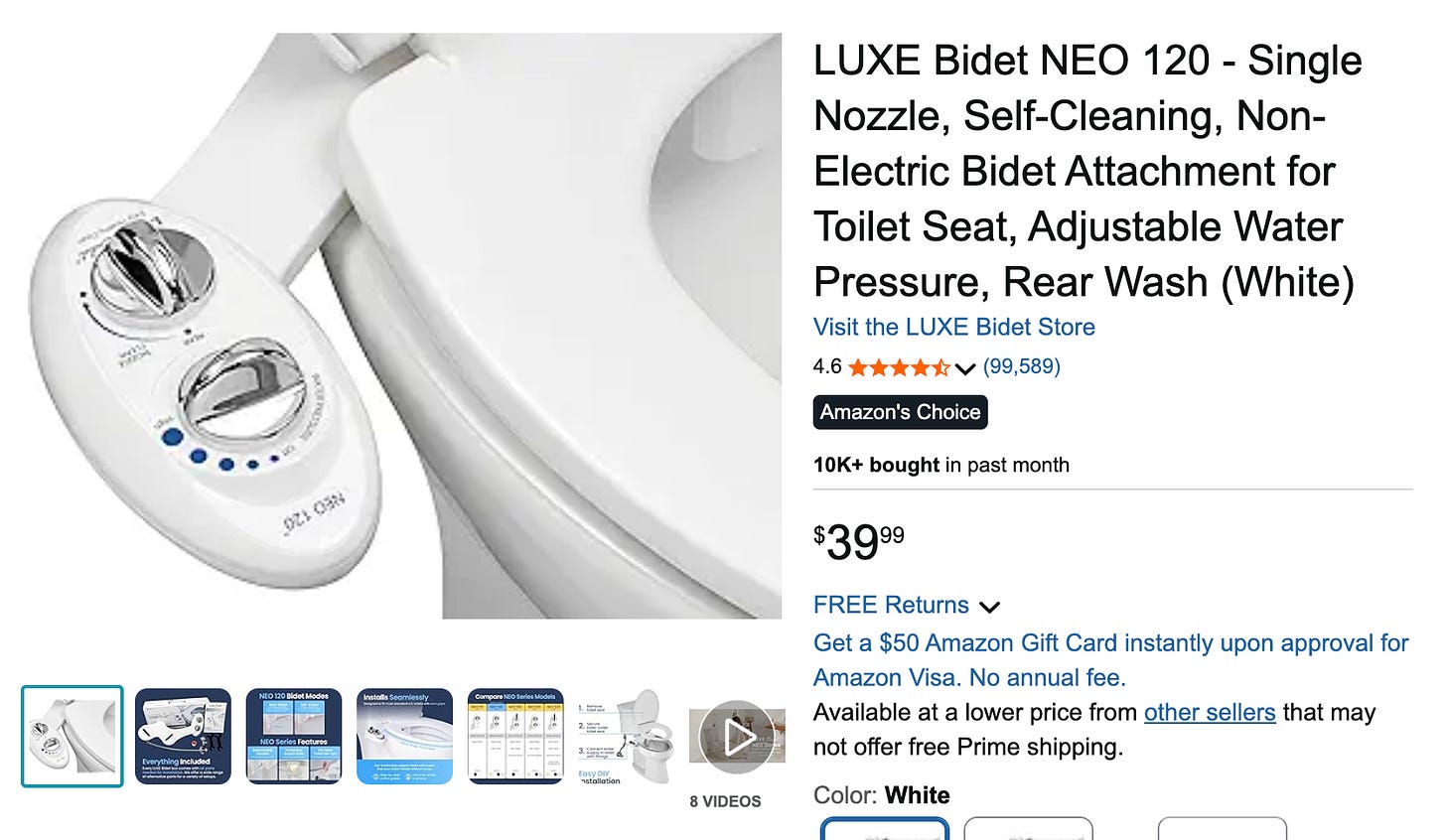
In all honesty, I find it somewhat shocking, and a little concerning, that a mansion built in 1799 still does not have bidets to assist with personal hygiene. Yet here we are. So, I felt it prudent to parlay this event into an important lesson about personal hygiene in Islam—and the immense emphasis Islam lays on cleanliness.
Cleanliness in Islam: A Path to Health, Discipline, and Spiritual Growth
One of the most frequently cited sayings of Prophet Muhammad (sa) is his teaching that “cleanliness is half of faith.” This simple declaration captures an entire philosophy of living—one in which physical purity, spiritual wellbeing, and communal health are deeply intertwined.
Long before modern science articulated the links between hygiene and disease prevention, Islam established a comprehensive ethic of cleanliness that shaped personal habits, public health, and even global scientific advancement.
Water, Purification, and Avoiding Harm
Islam explicitly commands Muslims to cleanse themselves with water after using the bathroom. This practice, universally adopted in Muslim societies, drastically reduces the spread of disease, eliminates bacteria, and ensures that impurities remain where they belong. Today, as studies consistently affirm the hygienic benefits of washing rather than wiping, the bidet—newfound “modern” innovation—echoes a Sunnah practiced for 1,400 years.
Prophet Muhammad (sa) taught this standard with remarkable clarity, instructing his followers to wash themselves thoroughly after relieving themselves. What many consider basic hygiene today was in fact pioneered as a moral and spiritual obligation in Islam centuries before germ theory existed.
Wudoo: Ritual Ablution Five Times a Day
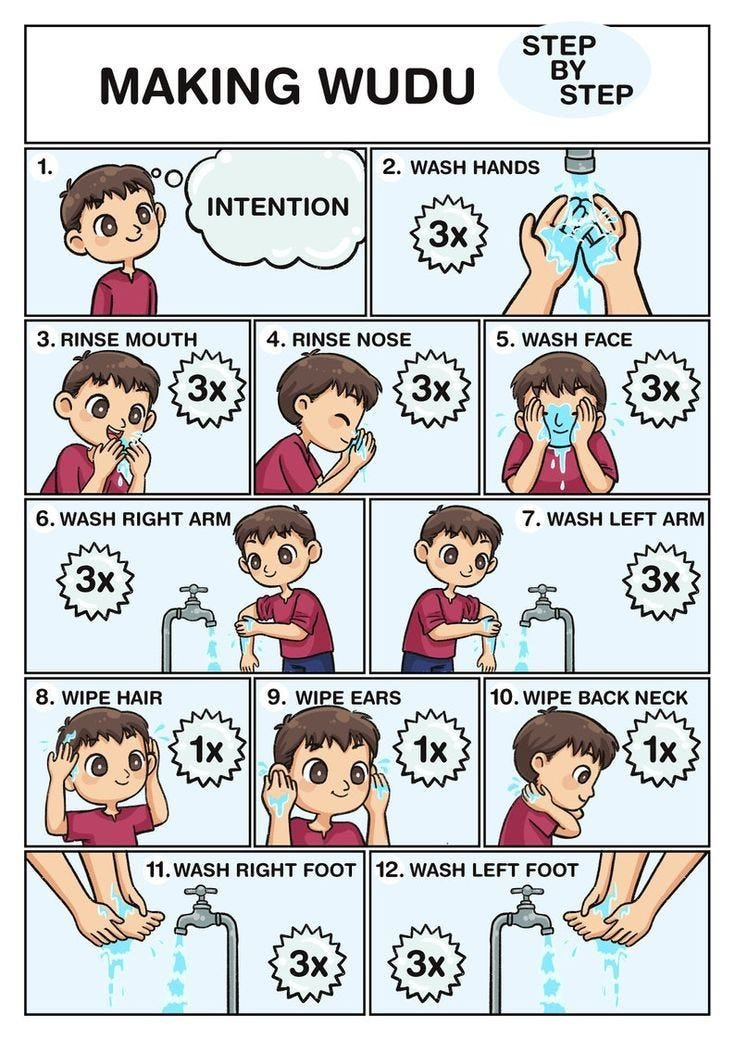
Five times daily, Muslims perform wudoo, an ablution that involves washing the hands, mouth, nostrils, face, arms, ears, hair, and feet. Though designed as a spiritual preparation for prayer, wudoo also maintains extraordinary personal hygiene. This repeated cleansing regulates daily routines, sharpens awareness, and reinforces the idea that a clean body is a prerequisite for a clear and focused heart.
Bathing and Grooming as Sacred Discipline
Islam was the first religious tradition to mandate regular bathing, encouraging daily showers and requiring—at minimum—a full bath every Friday before the congregational prayer. This weekly purification wasn’t merely symbolic; it set a standard for public hygiene in a world where bathing was rare.
Prophet Muhammad (sa) also encouraged Muslims to wear pleasant fragrances so that being in each other’s company would be refreshing and pleasant, not burdensome.
Beyond bathing, Islam instructs believers to trim body hair in areas where bacteria commonly thrive—specifically under the arms and in the pubic region—and to shower after sexual relations. Each of these teachings underscores a profound insight: personal hygiene shapes not only physical health, but dignity, self-respect, and the health of one’s community.
Oral Hygiene and the Islamic Roots of Modern Dental Care
Muslims famously invented the toothbrush, building upon the Prophet Muhammad’s (sa) own practice of using the miswaak to clean his teeth multiple times a day. He even remarked that if he did not fear overburdening his followers, he would command them to clean their teeth before every prayer.
Through Moorish Spain, Muslims brought advanced hygiene practices—including bathing culture, sanitation systems, hospitals, and even early forms of vaccination—to Europe. These reforms dramatically reduced disease and reshaped public health on an entire continent.
Islam’s Early Contribution to Pandemic Response
Even in matters of contagion, Islamic teachings were centuries ahead of global scientific awareness. While institutions such as the NIH note that organized responses to disease control began in the mid-14th century during the plague, Islam introduced quarantine protocols seven centuries earlier.
Prophet Muhammad (sa) taught:
If you hear of an outbreak of plague in a land, do not enter it; but if the plague breaks out in a place while you are in it, do not leave that place. (Sahih Bukhari)
This became the foundation of modern quarantine—an early, remarkably effective public health policy grounded in moral responsibility.
Cleanliness as a Spiritual Philosophy
Ultimately, Islam’s approach to cleanliness is not merely functional. It is fundamentally spiritual. A pure body creates space for a purified soul. A disciplined, clean life strengthens moral clarity. And just as Islam teaches us to cleanse outward impurities, it teaches us to protect ourselves from inward ones—by avoiding substances that harm the body and darken the spirit, such as alcohol, intoxicants, carrion, and other destructive elements. Indeed, even the concept of halal food requires the meat we consume is slaughtered in a humane, hygienic, and environmentally sustainable manner.
Islam’s hygiene is therefore not a list of rules; it is a holistic system in which health, spirituality, and human dignity reinforce one another.
Conclusion
Cleanliness in Islam is far more than ritual—it is a philosophy of life that binds together physical health, social responsibility, and spiritual growth. From daily ablution to pandemic protocols, from dental hygiene to mandatory weekly bathing—and yes, even those ‘luxurious’ bidets that Mayor Mamdani is installing in Gracie Mansion—Islam laid down a blueprint for human flourishing long before modern science caught up.
These teachings remind us that caring for our bodies is not superficial; it is sacred. It is an expression of gratitude, humility, and discipline. And it is one of the many ways Islam invites us to elevate both our outer lives and our inner selves.
Let's Address This is a reader-supported publication. To receive new posts and support my work, consider becoming a free or paid subscriber.