The Islamic Teaching On Responding to Insults

Elevating discourse in the face of vitriol
If you’ve followed my work over the years, you’ve likely seen the volume of vitriol I receive in response to my human rights advocacy. The insults come in many forms—my Muslim faith, my Pakistani heritage, my identity as a naturalized citizen. And while I am far from perfect, you’ve never seen me respond in kind with dehumanizing slurs or personal attacks. That isn’t because I lack the capacity to reply—it’s because I do my best to follow a standard of dialogue and engagement taught by Islam and embodied by the Prophet Muhammad (sa).
In an age when public discourse often descends into outrage, mockery, and personal insults, I believe it is vital to return to the teachings of restraint, justice, and goodness. Our words, especially when we feel wronged, are a moral test. How we respond to cruelty says more about us than those who dish it out.
Repel Evil With What Is Better
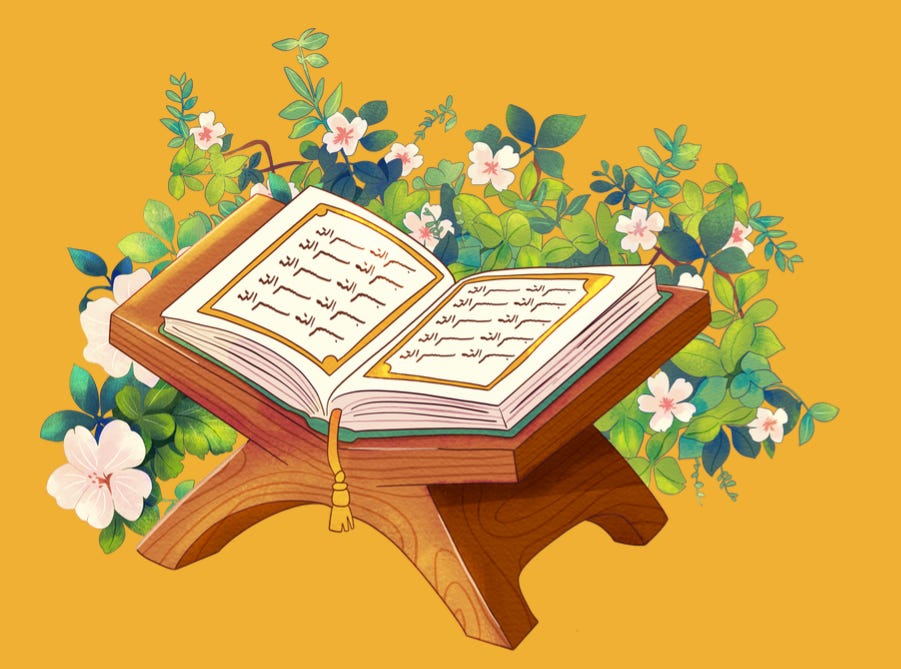
The Qur’an offers clear and beautiful guidance on how to respond to hate and harm. In Surah Fussilat, the Qur’an teaches:
“And good and evil are not alike. Repel evil with that which is best, and lo, he between whom and thyself was enmity will become as though he were a warm friend.”
(Qur’an 41:35)
This is not just advice for a personal life—it is a blueprint for public leadership. When we are misunderstood, we explain with clarity and kindness. When we are deliberately misrepresented, we maintain our dignity and uphold justice irrespective of how we are treated. The goal is not to “win” an argument but to win hearts—and that is a different kind of victory altogether. Accordingly in Surah Al-Maidah, the Qur’an admonishes:
O ye who believe! be steadfast in the cause of God, bearing witness in equity; and let not a people’s enmity incite you to act otherwise than with justice. Be always just, that is nearer to righteousness. And fear God. Surely, God is aware of what you do. (Qur’an 5:9)
Thus, the minimum standard of behavior we are called to embrace is absolute justice—even in the face of enmity. Similarly, in Surah Al-Furqan, the Qur’an describes the true servants of God as follows:
“And the servants of the Gracious God are those who walk on the earth in a dignified manner, and when the ignorant address them, they say, ‘Peace!’”
(Qur’an 25:64)
These verses are not passive. They are active rejections of cruelty, slander, and ignorance—not by matching the fire, but by rising above it. This is not weakness. It is the most profound strength.
The Prophet’s Standard for Speech and Restraint
One of the most instructive traditions in the life of the Prophet Muhammad (sa) comes from a moment with his beloved companion, Abu Bakr (ra). The story is recorded in Musnad Ahmad:
Abu Huraira narrated that a man insulted Abu Bakr while the Prophet (sa) was sitting beside him. At first, Abu Bakr remained silent, and the Prophet (sa) smiled in approval. But when Abu Bakr responded with some of the same insults, the Prophet’s face changed. He stood up and left.
Abu Bakr later asked him why he left. The Prophet replied:
“Verily, there was an angel with you responding on your behalf, but Satan appeared when you responded in kind. I will not sit in the presence of Satan.”
This is the prophetic standard. As long as Abu Bakr maintained his dignity, angels stood with him. But the moment he mirrored his insulter’s tone, the moral landscape changed. Even the Prophet (sa) would not remain in a space where Satan’s influence entered.
In other words, it is not merely the words we use—but the spirit in which we speak—that matters most.
Free Speech is Sacred—And With Responsibility
Yes, freedom of speech is foundational. In our country, it is a cherished right. But rights come with responsibility. When free speech becomes a license to demean, destroy, divide, or dehumanize—it ceases to be virtuous. Speech has power. Words can heal or they can harm. As Americans and as human beings, we must ask: What kind of society do we wish to build with our words?
Islam teaches that when we are wronged, we are not powerless. We are invited to take the higher path—to correct injustice without reproducing its ugliness. This isn’t a call to silence ourselves in the face of hatred. It is a call to respond with substance, not slander. With clarity, not cruelty. With truth, not spite. I utilize such opportunities to engage in what I call collateral education. The person insulting me may not benefit from my response grounded in facts and justice—but hopefully the thousands reading the conversation will benefit, and grow. To me, building up societal unity against hate and ignorance is a major win.
A Call to Elevate Our Conversations
We live in a time when insults are often mistaken for strength, and cruelty is packaged as courage. But that’s not the world I want to help build. I believe in justice. I believe in accountability. And I believe in truth-telling. But above all, I believe we must never forget the humanity of those we disagree with—even those who insult us.
We don’t know what burdens others are carrying. We don’t know the source of their anger. But we do know our own capacity—for restraint, for compassion, and for principled disagreement. And we do know many are watching us, especially the next generation. And if we can influence them in a positive manner, we must do so.
So let us strive not merely to speak freely, but to speak beautifully. Let us reject the temptation to mirror hatred with hatred. And let us remember that in every moment of insult, there is a chance to transform the conversation—to uphold the dignity of our faith, and our shared humanity.
May we be among those who respond to ignorance with peace. And may our discourse reflect the light of justice and the beauty of character that Prophet Muhammad (sa) so powerfully modeled.