The Three Parts of Ramadan

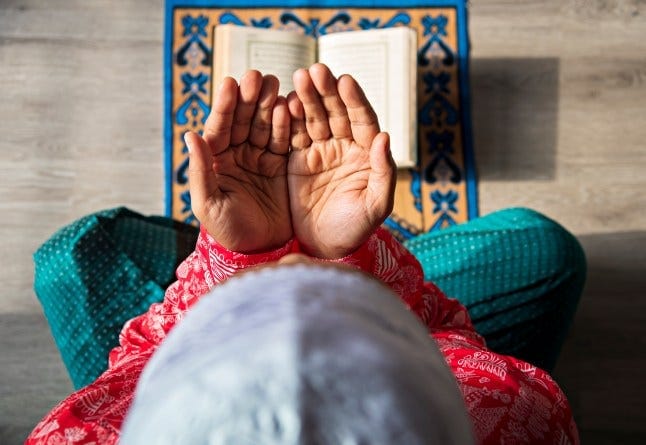
Mercy, Forgiveness, and Salvation
Prophet Muhammad (sa) declared that:
“When the month of Ramadan comes, the gates of Paradise are opened and the gates of the (Hell) Fire are closed, and the devils are chained.”
حَدَّثَنَا يَحْيَى بْنُ بُكَيْرٍ، حَدَّثَنَا اللَّيْثُ، قَالَ حَدَّثَنِي عُقَيْلٌ، عَنِ ابْنِ شِهَابٍ، قَالَ حَدَّثَنِي ابْنُ أَبِي أَنَسٍ، مَوْلَى التَّيْمِيِّينَ أَنَّ أَبَاهُ، حَدَّثَهُ أَنَّهُ، سَمِعَ أَبَا هُرَيْرَةَ ـ رضى الله عنه ـ يَقُولُ قَالَ رَسُولُ اللَّهِ صلى الله عليه وسلم “ إِذَا دَخَلَ رَمَضَانُ فُتِّحَتْ أَبْوَابُ الْجَنَّةِ، وَغُلِّقَتْ أَبْوَابُ جَهَنَّمَ، وَسُلْسِلَتِ الشَّيَاطِينُ ”. Reference : Sahih al-Bukhari 3277
In this short article I share what this means and the three stages (or Ashras) of Ramadan that define this holy month.
Let's Address This is a reader-supported publication. To receive new posts and support my work, consider becoming a free or paid subscriber.
An Annual Elevation
Ramadan holds a special place in Islamic teachings because it serves as an annual opportunity to elevate ourselves to the two obligations every Muslim has—service to God and service to humanity. And as I’ve shared before, service to God is impossible without first prioritizing service to humanity.
In a future piece I’ll discuss the critical role charity plays during the month of Ramadan. For this piece, I want to share the three key phases of Ramadan—Mercy, Forgiveness, and Salvation.
First 10 Days - The Ashra of Mercy
The first 10 days of Ramadan are known as the Ashra of Mercy. As God teaches Muslims to pray in the Holy Qur’an:
رَبِّ اغْفِرْ وَارْحَمْ وَاَنْتَ خَیْرُ الرَّاحِمِیْنَ
“My Lord, forgive and have mercy, and Thou art the Best of those who show mercy.” (Chapter 23, Verse 119)
The first 10 days of Ramadan are a reminder to believers that God indeed has the power to forgive and that His mercy is infinite. Again in the Qur’an God teaches:
وَاکۡتُبۡ لَنَا فِیۡ ہٰذِہِ الدُّنۡیَا حَسَنَۃً وَّفِی الۡاٰخِرَۃِ اِنَّا ہُدۡنَاۤ اِلَیۡکَ ؕ قَالَ عَذَابِیۡۤ اُصِیۡبُ بِہٖ مَنۡ اَشَآءُ ۚ وَرَحۡمَتِیۡ وَسِعَتۡ کُلَّ شَیۡءٍ ؕ فَسَاَکۡتُبُہَا لِلَّذِیۡنَ یَتَّقُوۡنَ وَیُؤۡتُوۡنَ الزَّکٰوۃَ وَالَّذِیۡنَ ہُمۡ بِاٰیٰتِنَا یُؤۡمِنُوۡنَ ﴿۱۵۷﴾ۚ
[✲]‘And ordain for us good in this world, as well as in the next; we have turned to Thee with repentance.’ God replied, ‘I will inflict My punishment on whom I will; but My mercy encompasses all things; so I will ordain it for those who act righteously, and pay the Zakat and those who believe in Our Signs. (Chapter 7, Verse 157)
Here God reminds us that while He has the power to punish, His mercy exceeds His wrath, and we should always seek God’s mercy. Thus, the second 10 days of Ramadan are the days of Forgiveness.
Second 10 Days - The Ashra of Forgiveness
Islam requires no mediator between a person and the Creator to attain forgiveness. A person’s relationship with the Creator is direct, unhindered, and unfiltered. Thus, God teaches us in the Qur’an to pray:
اَنْتَ وَلِیُّنَا فَاغْفِرْ لَنَا وَارْحَمْنَا وَاَنْتَ خَیْرُ الْغَافِرِیْنَ
“Thou art our Protector; forgive us then and have mercy on us and Thou art the Best of those who forgive.” (Chapter 7, Verse 156)
Building on this teaching the Prophet Muhammad (sa) would additionally pray and teach Muslims to pray:
اللَّهُمَّ اغْفِرْ لي ذَنْبِي كُلَّهُ دِقَّهُ وَجِلَّهُ وَأَوَّلَهُ وَآخِرَهُ وَعَلَانِيَتَهُ وَسِرَّهُ
“O Allah! Forgive all my sins, the small and the great, first and the last, the open and the secret.” (REFERENCE: Riyad as-Salihin, Kitab al-adhkar, Bab fadl al-dhikr wa al-hath ‘alayh, Hadith 1429)
In this way, a person can maintain a direct a personal relationship with God, and God’s promise in return is that He hears prayers and forgives errors. Thus, far from a wrathful, angry, or vengeful God, the Qur’an describes God as “The Gracious” and “The Merciful.” Thus, in the Qur’an God also guides us to never lose hope:
قُلۡ یٰعِبَادِیَ الَّذِیۡنَ اَسۡرَفُوۡا عَلٰۤی اَنۡفُسِہِمۡ لَا تَقۡنَطُوۡا مِنۡ رَّحۡمَۃِ اللّٰہِ ؕ اِنَّ اللّٰہَ یَغۡفِرُ الذُّنُوۡبَ جَمِیۡعًا ؕ اِنَّہٗ ہُوَ الۡغَفُوۡرُ الرَّحِیۡمُ ﴿۵۴﴾
Say, “O My servants who have committed excesses against their own souls! despair not of the mercy of Allah, surely Allah forgives all sins. Verily He is Most Forgiving, Merciful. (Chapter 39, Verse 54)
Notice that this verse does not specify Muslims—but servants, i.e. all humanity. God’s mercy and salvation is not exclusive to one tribe or group, but indeed to all people. That is what true mercy and grace requires. And this point leads to the final 10 days of Ramadan, the Ashra of Salvation.
Third 10 Days - The Ashra of Salvation
As mentioned earlier, Islam requires no mediator or sacrifice for salvation—it is something God directly offers all humanity. Thus, one charm of Ramadan’s final 10 days is the Ashra of Salvation. Thus the Qur’an teaches us to pray,
رَبَّنَا اٰتِنَا فِی الدُّنْیَا حَسَنَۃً وَّفِی الْاٰخِرَۃِ حَسَنَۃً وَّقِنَا عَذَابَ النَّار
“Our Lord, grant us good in this world as well as good in the world to come, and protect us from the torment of the Fire.” (Chapter 2, Verse 202)
Note that the verse doesn’t only talk about the afterlife, but also prays for goodness in this life as well. Islam is not a fatalistic religion that teaches that this world is meaningless or useless. On the contrary, Muslims are encouraged to live good lives, enjoy the fruits of their labor in this life, and enjoy the goodness this life brings—and also to not lose sight of the life to come. And in praying for that life to come, Muslims are taught to pray for salvation. And God, being “Most Gracious, Ever Merciful” promises that His salvation is binding for all humanity. Additionally Prophet Muhammad (sa) declared:
Surely a time will come over hell when its gates shall be blown by wind, there shall be none in it, and this shall be after they have remained therein for many years.
Likewise, he added, “Allah will bring out people from the Fire and admit them into Paradise.” (Sahih Muslim 1:368)
And as an additional point of wisdom, the Messiah Ahmad (as) writes:
It is contrary to God’s perfect attributes that once a person has been condemned to hell, only the Divine attributes of chastisement should be manifested. . . . [I]n the end all will attain salvation as the hand of God is unlimited and no one can be left out of it.
Conclusion
Ramadan is, at its core, an annual reminder that God’s mercy precedes His wrath, that forgiveness is always within reach, and that salvation is a promise extended to all of humanity. The three Ashras—Mercy, Forgiveness, and Salvation—guide believers through a month-long spiritual journey that is both inward and outward, refining our character while deepening our service to others. When the Prophet Muhammad (sa) taught that the gates of Paradise open during this month, he was inviting us to walk through them by embracing compassion, seeking forgiveness, and extending grace to all those around us.
As we move through Ramadan, may we carry its lessons beyond fasting hours and into the way we treat one another—seeing every day as a new opportunity for mercy, for reconciliation, and for spiritual growth.
If you’ve found value in these reflections, I invite you to Let's Address This. Your support helps me continue writing, teaching, and pushing back against misinformation with scholarship, clarity, and compassion.