What Corporate Media’s Silence Is Costing Us
It's not just the disinformation, but the censorship, that risks undermining our republic
There are moments when the most important question is not what is happening, but why so many people are never told that it is happening at all? We are living in one of those moments.
Independent human rights watchdogs report that since the alleged “ceasefire” in Gaza, the Israeli military has violated it nearly one thousand times, killing more than four hundred Palestinians. A Minnesota judge just stated on the record that ICE has disobeyed close to one hundred binding court orders, operating with near-total impunity. In the United States alone, DHS and ICE have now killed at least nine innocent people, including Renée Good and Alex Pretti, and every one of the remaining victims you’ve likely not even heard of has been Black, Asian, or Latino.
These are not marginal stories. They speak directly to the erosion of human rights, the collapse of the rule of law, and the normalization of state violence. And yet, few of these facts are receiving sustained or serious coverage in mainstream outlets. If many Americans are unaware of them, that is not because the information is unavailable. It is because powerful institutions have decided that informing the public is no longer worth the risk.
That decision has consequences. And we need meaningful solutions. Let’s Address This.
Let's Address This with Qasim Rashid is a reader-supported publication. To receive new posts and support my work, consider becoming a free or paid subscriber.
When Silence Becomes a Political Act
Corporate media’s failure to cover the aforementioned realities (among numerous other critical stories) is often framed as incompetence or oversight. That framing is generous, and it is inaccurate. What we are witnessing is not a breakdown in journalism, but a realignment of incentives.
Major media companies are owned by billionaires and governed by executives who are acutely aware of the political and financial costs of challenging power. Under this administration, those costs are no longer theoretical. Networks have learned that confrontation brings retaliation, while compliance brings stability. The result is a media ecosystem that increasingly avoids disruption, minimizes accountability, and sanitizes state violence in favor of access and profitability.
Fox News has long operated as an extension of authoritarian messaging, but it would be a mistake to believe this problem is isolated. CBS has capitulated. CNN and MSNBC routinely fail to provide consistent, rigorous coverage of abuses that implicate federal power. ABC chose to settle with Donald Trump for $15 million dollars rather than defend itself in court for accurately describing conduct that had already been adjudicated. And now, TikTok joins Twitter, Instagram, Facebook, and WhatsApp as billionaire owned media platforms hyper aligned to Trump. As a result, our options for clarity of information that we as ordinary people need, continue to decrease.
This is not neutrality. It is accommodation. And when journalism accommodates power, it ceases to serve the public.
The danger is not simply that people are uninformed. The danger is that injustice becomes normalized precisely because it is hidden, fragmented, or stripped of context. A public that does not know what is being done in its name cannot meaningfully oppose it.
But let me get beyond the abstract to show you what I mean in practical terms.
What I Witnessed in Minnesota
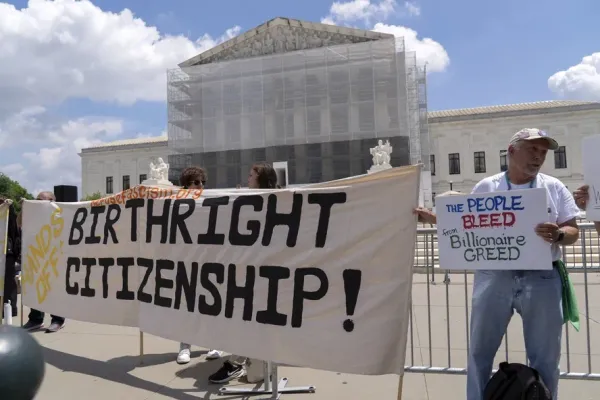
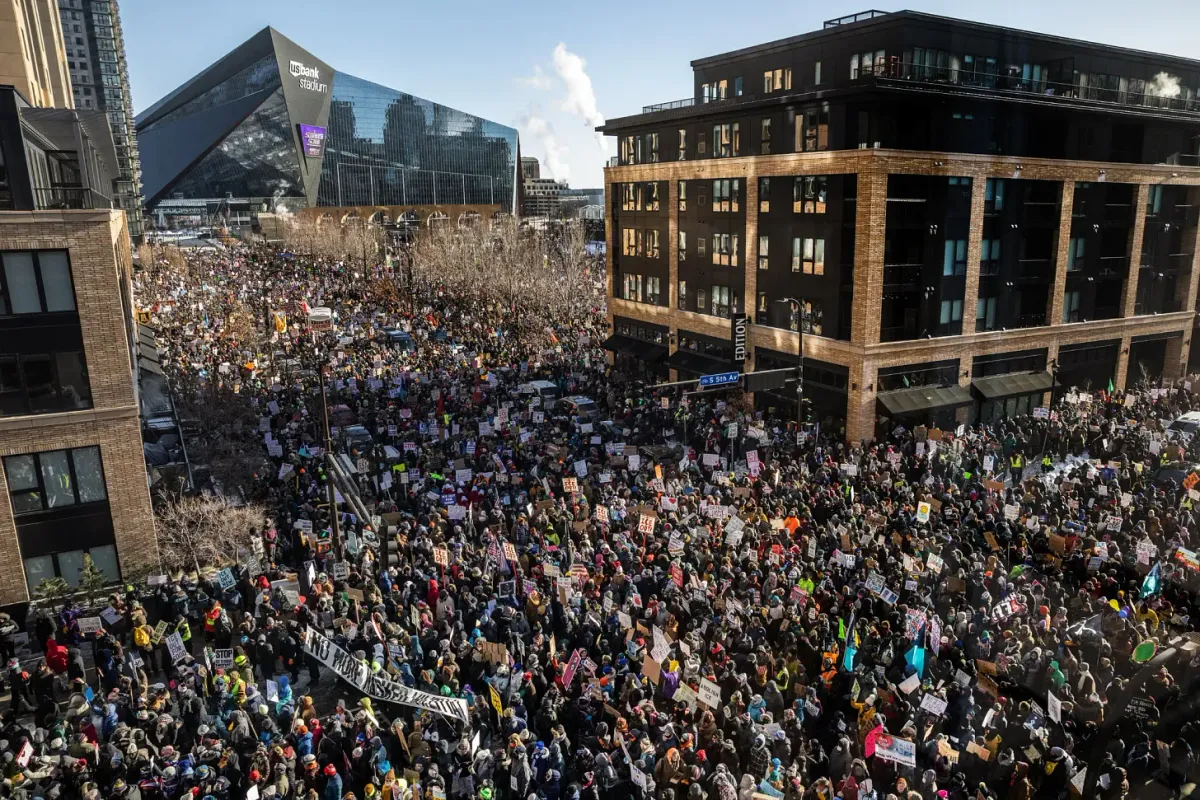
Last week in Minnesota, I stood at the Minneapolis-St. Paul airport alongside hundreds of faith leaders representing a broad spectrum of belief and non-belief, united in opposition to ICE’s repeated violations of the law. The gathering reflected moral clarity, solidarity, and an urgent demand for accountability. And I documented as a legal observer as police arrested nearly 100 peaceful protestors, speaking up for the marginalized and abused.
What was most striking was not only the substance of the protest, but who chose to document it.
The reporters consistently covering the story were independent journalists, nonprofit media outlets, and human rights advocates. Corporate media presence was minimal. This absence was not incidental; it reflected editorial priorities that increasingly sideline stories of state abuse unless they become impossible to ignore. Here was a moment of immense solidarity against extremism and should have been frontline news. Yet the reality proved the opposite. It was barely a blip. Division and fear is the profit strategy. Unity and compassion is not.
That experience reinforced a reality many already sense: the existing media structure is not equipped—or willing—to meet this moment. A democratic society cannot function when the institutions tasked with informing it are structurally incentivized to look away.
Why Independent Media Matters
This is precisely why independent media is not a luxury, but a necessity.
When I launched Let’s Address This, the goal was not to offer commentary divorced from accountability, but to confront injustice directly and consistently. Over the course of more than now 700 articles and 35 million readers, this platform has documented abuses of power, elevated marginalized voices, and challenged authoritarian narratives that corporate media too often avoids.
This work is sustained not by billionaire donors or corporate sponsors, but by readers who understand that platforms funded by the public are platforms accountable to the public. Every subscription, share, and engagement strengthens an ecosystem that prioritizes truth over access and accountability over comfort.
How Ground News Fits Into the Solution
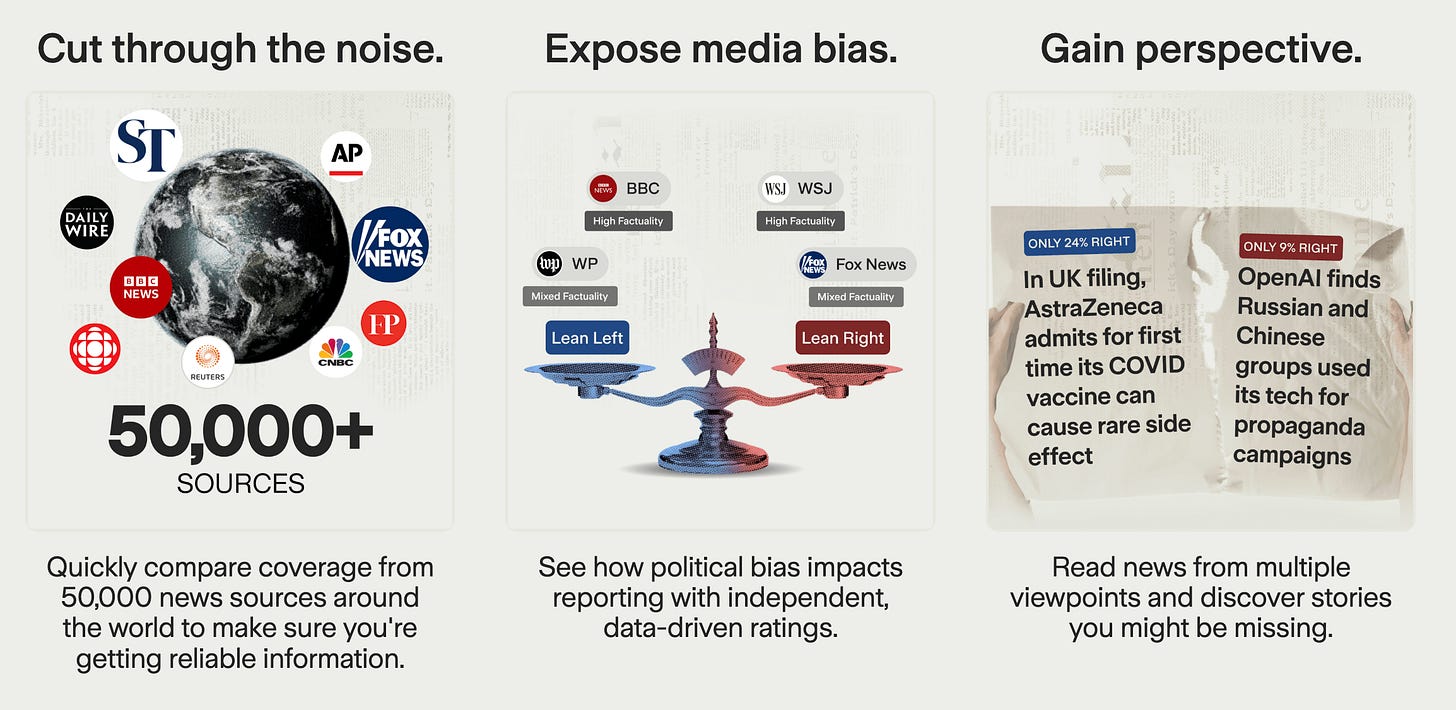
I also use tools to guide my analyses. Independent reporting tells the stories that corporate media refuses to tell. Ground News helps explain why those refusals happen in the first place.
Ground News is not simply another news aggregator. It is a tool designed for media literacy in an era defined by disinformation and concentrated ownership. By collecting coverage from across the ideological and geographic spectrum, it allows readers to see which stories are being emphasized, which are being ignored, and how ownership and funding influence editorial decisions.
Ground News does not instruct readers on what conclusions to draw. Instead, it provides transparency—who owns an outlet, who funds it, and how consistently it covers certain issues—so readers can make informed judgments themselves. In a media environment where power increasingly operates through omission rather than overt falsehood, that transparency is indispensable.
Importantly, Ground News itself is subscriber-supported rather than billionaire-funded. Subscribing does not simply grant access to information; it supports an infrastructure that prioritizes accountability and openness. For readers who choose to subscribe through my link, Ground News is offering a significant discount on the Vantage Plan, making it an accessible investment in staying informed rather than managed.
Get 40% off Ground News
A Collective Responsibility
The erosion of press freedom and public accountability does not occur all at once. It advances incrementally, through silence, avoidance, and the normalization of abuses that go unreported. Reversing that trajectory requires sustained engagement, not passive consumption. Right now we’re behind the eight ball—we need to get to work.
Supporting independent media and using tools like Ground News that expose structural bias are not symbolic acts. They are practical steps toward reclaiming the public’s right to know. They reflect an understanding that democracy depends not only on elections, but on an informed and engaged populace.
I am committed to continuing this work, and I know many of you are as well. The question is not whether the truth still matters, but whether we are willing to invest in the systems that allow it to surface. In moments like this, disengagement is not neutrality. It is acquiescence. Engagement, by contrast, remains one of the few tools capable of pushing back against the quiet consolidation of power.
Thank you for staying engaged as we continue to fight against fascism and for humanity.
Let's Address This with Qasim Rashid is a reader-supported publication. To receive new posts and support my work, consider becoming a free or paid subscriber.